







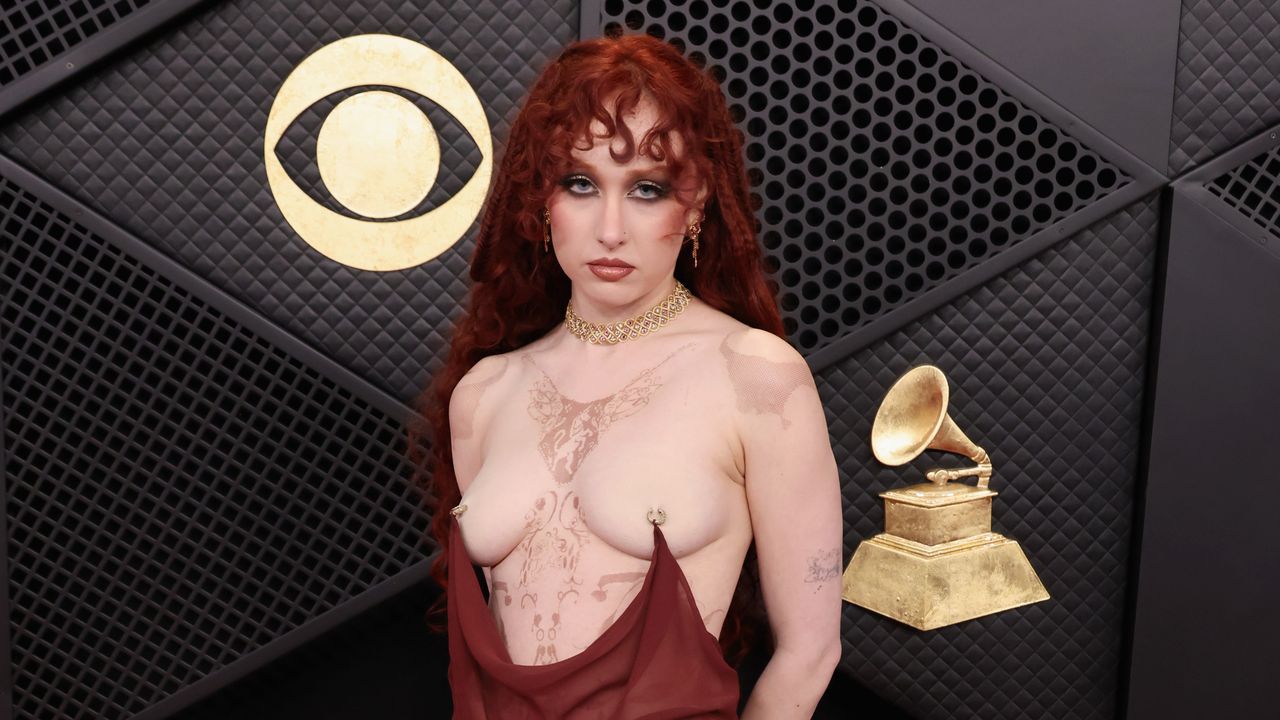
Chappell Roan made a striking statement on the Grammys red carpet, effortlessly skirting Instagram’s stringent nudity regulations with her inventive attire. Nominated for both Song of the Year and Best Pop Solo Performance, Roan donned a sheer burgundy dress from Mugler, reminiscent of a piece from the designer’s 1998 spring/summer collection. The dress flowed beautifully, accompanied by a matching sheer cape that highlighted her daring style. However, the standout aspect wasn’t just the dress itself, but how Roan navigated the tricky waters of social media censorship, which often zeroes in on female nudity with unforgiving strictness.
As viewers across social media tuned in, many, including myself, zoomed in to make sense of how Roan managed to present such an audacious look without facing an online backlash. Surprisingly, what seemed like a bold fashion choice was cleverly executed through the use of prosthetics. Instead of actual nipple piercings, Roan’s ensembles were secured by smooth, nipple-free surfaces, thanks to the ingenious work of prosthetic artist Sasha Glasser. Utilizing peel-and-stick pasties from the brand Out of Kit, Glasser ensured Roan’s look had both flair and safety, guarding her modesty in the event of any unforeseen wardrobe malfunctions.
Roan’s unapologetic fashion statement became a mirror reflecting the absurdity of social media guidelines that often seem outdated and inconsistent. With her nearly nude appearance being so widely shared, it begs the question: what truly delineates appropriate visibility on platforms like Instagram? Roan’s choice to forgo the nipples, while making a bold statement, also offers a pointed critique of how society perceives the female form. In a world that regularly venerates nudity in various contexts yet criminalizes it when it involves female bodies, Roan’s look is a refreshing reminder of the complexities of expression and censorship.
The impact of Roan’s decision rippled through the online community, highlighting a larger conversation about body positivity, the role of fashion in self-expression, and the often hypocritical standards imposed by social media. Many users applauded her artistry and the clever way she circumvented restrictions while still making a captivating fashion statement. It sparked discussions about how creatively challenging traditional norms can lead to conversations about empowerment and autonomy over one’s body, particularly for women who have often been objectified and policed.
This incident not only shows Roan’s keen fashion sense but also opens a dialogue about the power dynamics at play in digital spaces. The use of prosthetics as a means of artistic expression challenges the norm and provides a fresh perspective on how to navigate the limitations set forth by these platforms. It resonates on a deeper level, reminding us that even in instances of perceived restriction, there lies an opportunity for creativity and innovation, urging others to find their unique voices in the ongoing dialogue surrounding body image and representation.
In conclusion, Chappell Roan’s memorable appearance at the Grammys serves as an impactful commentary on fashion, censorship, and female empowerment. By creatively utilizing prosthetics to bypass social media restrictions, she not only showcased her bold style but also ignited important conversations about how body representations and social media policies often clash. Her choice exemplifies not just a fashion statement, but an invitation for more nuanced discussions on societal norms and the evolving standards surrounding the female body in the digital age.


