

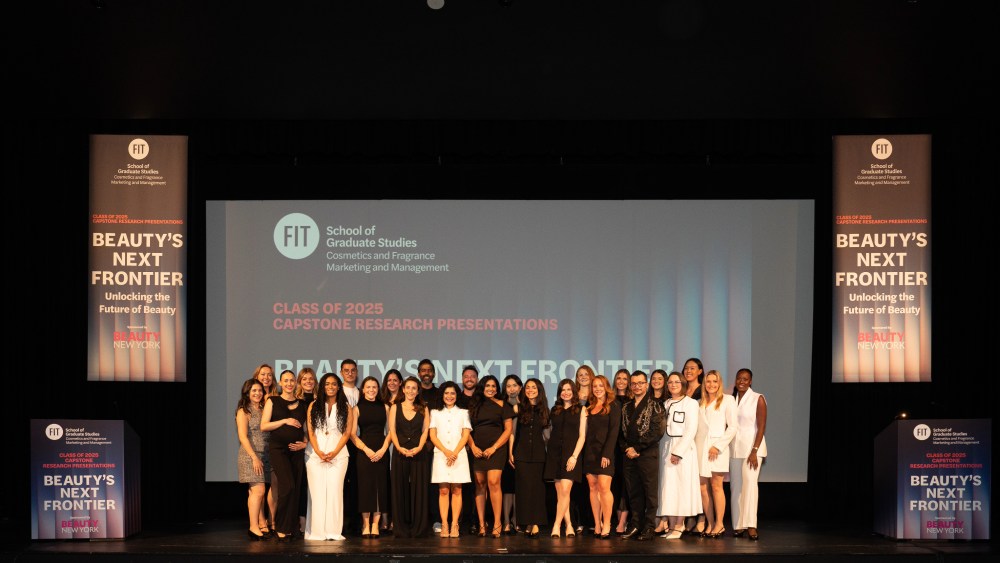
On a recent Thursday evening at the Fashion Institute of Technology (FIT), an engaging capstone presentation paved the way for a promising future in the beauty industry. Kicking off the event, a graduate highlighted the critical discourse surrounding Generation Alpha, a demographic entering the market with their unique preferences and digital interactions. This cohort, known informally as “Sephora kids,” has been significantly impacting the beauty landscape, spending a staggering $8 billion in 2023, a figure projected to reach $14 billion in 2024. The graduate argued that understanding their behaviors is essential for the industry’s innovation, stressing that Gen Alpha is defined more by their experiences and values than by traditional life stages.
In his opening remarks, FIT president Dr. Joyce F. Brown, who will step down in 2025 after nearly 26 years leading the institution, also recognized the late Leonard A. Lauder, a pivotal figure in the beauty industry and a key architect of the Cosmetics and Fragrance Marketing and Management program. The evening was not just a celebration of academic achievements but also a poignant reminder of the industry’s legacy shaped by influential figures.
As the presentations unfolded, the graduates introduced a novel paradigm they referred to as “Generation Next.” These young beauty consumers are evolving rapidly, with skin concerns and favorite brands shifting approximately every 18 to 24 months and every four months, respectively. The fast-paced nature of their preferences demands that beauty brands develop products at an unprecedented speed, highlighting a crucial need for agility in product development. This evolving landscape requires industry players to innovate and engage continuously, ensuring they maintain relevance with this dynamic consumer group.
One of the most exciting discussions centered around harnessing the power of artificial intelligence (AI) in beauty product development. The graduates envisioned a future where AI could personalize products in real-time, adapting formulations to consumers’ skin types, environmental factors, and even stress levels. They pointed to the successful predictive models used by giants like Netflix and Amazon as a blueprint for beauty brands aiming to keep pace with shifting consumer expectations. However, they also urged caution, emphasizing the importance of understanding AI biases and risks before companies dive headfirst into its applications.
The evolution of beauty is not just in technology but also in its perception. The presentations discussed the “medicalization” of beauty, a concept gaining traction as society shifts towards integrating medicine with aesthetic desires. With the popularity of treatments like GLP-1s and the rising longevity movement, graduates argued that beauty is increasingly viewed through a medical lens. Their research showed that a significant majority of consumers prioritize longevity products, indicating that medical concerns are now intimately tied to beauty and self-image. This shift calls for brands to adopt more science-driven approaches, collaborating with medical professionals and focusing on efficacy rather than merely marketing.
Closing the event, the graduating class was highlighted as the future of the beauty industry, with their fresh perspectives ready to challenge norms and drive innovation. The graduates, including individuals like Chloe Lo, Hallie Gersten, Al Mezo, and many others, represent a vibrant blend of talent and ambition aimed at reshaping how beauty products are developed, marketed, and integrated into consumers’ lives. Their insights gathered throughout the program could herald a pivotal change in how the beauty industry interacts with and caters to an evolving consumer base, providing a fascinating glimpse into what lies ahead.