








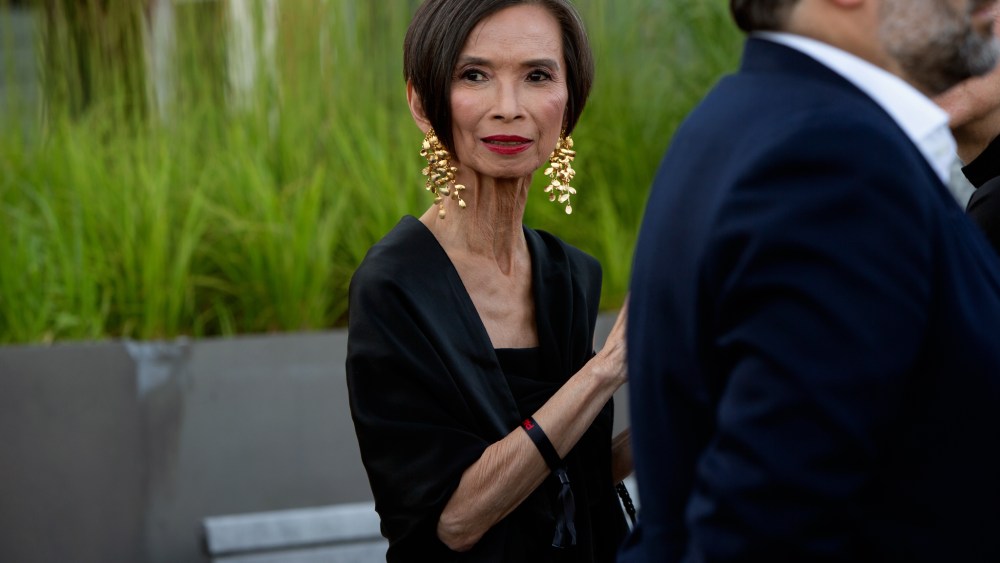
On a recent evening at Columbia Business School, two formidable figures in the world of business shared their insights with students: fashion designer Josie Natori and Lulu C. Wang, the founder of Tupelo Capital Management. Organized by the Jerome A. Chazen Institute for Global Business, the event titled “Bold Moves: Weaving Heritage and Creativity Into a Global Fashion Brand” attracted attention as the two women discussed their journeys, emphasizing the value of heritage and creativity in establishing a global brand. Their experiences provided students not just with inspiration but also practical advice on navigating their future careers in business, particularly in fields that are often male-dominated.
Wang opened the discussion by sharing her optimistic perspective on life. She believes in reframing challenges as advantages, particularly the unique experiences that come from being an Asian woman in the corporate world. “I look at life mostly as the glass is half-full,” she stated, encouraging students to turn perceived disadvantages into assets. Both women highlighted how their minority backgrounds could serve as advantages in an industry that often lacks diversity, stressing that differentiation is key in marketing and branding. For Wang, confidence is crucial; it can be contagious and is something that should be instilled in the next generation.
The conversation naturally turned to Natori’s remarkable journey. Having transitioned from a Wall Street career to launching her fashion brand in 1977, Natori discussed the drastic changes that the retail landscape has undergone since her early days in business. Remembering the plentiful stores that once filled the market, she spoke about the challenges and adjustments required in a landscape dominated by only a handful of major retailers today. This shift illustrates not only the evolution of consumer culture but also the importance of adaptability in business.
Students expressed interest in how Natori has managed to blend her financial acumen with creative vision. She emphasized that creativity isn’t confined solely to fashion; it exists in various realms such as technology and artificial intelligence. Natori’s message resonated with future business leaders, reminding them of the necessity to pursue passions and interests in their professional journeys. “Finding something that you love can be one of the biggest challenges in going into business today,” she said, offering encouragement to students facing an uncertain future in their careers.
Moreover, Natori conveyed a valuable lesson about failure and learning. She reminded students that how they start their careers isn’t indicative of how they will ultimately succeed. Making mistakes is a natural part of growth, and students should not fear failure but embrace it as a learning opportunity. Her candidness about her own experiences and setbacks provided a dose of realism and encouragement to the room, reinforcing that perseverance is a crucial trait in any field.
Wang’s remarks about the importance of female representation in decision-making processes, particularly in fields like artificial intelligence, were equally thought-provoking. She voiced concerns over a predominantly male-oriented corporate culture, pointing out that “bro culture” can hinder progress in both the economy and society. Wang’s call for women’s involvement in discussions that shape critical technologies is a reminder that diversity leads to better outcomes. Her vision is clear: if women are not included at the decision-making table, the resulting imbalance could have lasting repercussions, emphasizing that every voice, especially those of women, is vital in shaping the future.
In essence, the event served as a rallying cry for empowerment, creativity, and inclusivity in business. Natori and Wang not only inspired students but also equipped them with practical wisdom that transcends industries. Their discussions underscored the importance of believing in oneself, embracing diversity, and striving for creative solutions in an ever-evolving landscape, placing the onus on the next generation to foster a more equitable and innovative world. This blend of heritage, creativity, and resilience presents a roadmap for the students—a reminder that their journey, while uniquely challenging, is also filled with opportunities for growth and success.


