

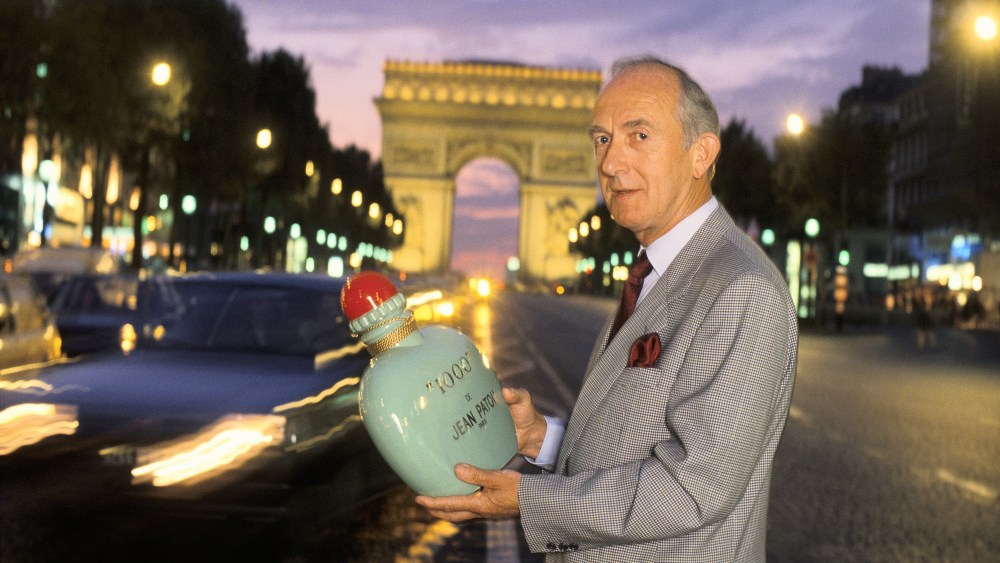
Perfumer Jean Kerléo, a luminary in the fragrance industry, passed away at the age of 93. His remarkable career spanned over three decades as the in-house perfumer for Jean Patou and as the co-founder of the Osmothèque, a dedicated archive for scents. His significant contributions to the world of perfumery were recognized through his presidency at Osmothèque until 2008, where he played a key role in preserving the essence of fragrances.
During his time at Jean Patou, from 1967 to 1998, Kerléo crafted many memorable scents, including the brand’s 1000 fragrance—an audacious women’s scent launched in 1972. His vision for this perfume was to distinguish it entirely from the iconic Joy, another hallmark of the Patou line. Kerléo was known for his innovative approach, drawing inspiration from diverse sources to create fragrances that resonated deeply with people’s emotions.
One of his notable creations, Liberté, drew inspiration from fashion designer Christian Lacroix, who was redefining French couture in the 1980s with his daring aesthetics. Kerléo’s ability to connect fragrance with the zeitgeist of fashion showcased his unique talent in the industry. He also created Sublime, another hallmark scent, further cementing his legacy at Jean Patou.
Kerléo viewed his profession as an art form, likening his work to that of musicians and painters. He believed in creating beauty, striving to capture emotions in fragrant form. In a WWD interview from 1986, he remarked that a perfect fragrance should express the wearer’s identity and evoke emotions. Contrary to the journalistic term “nose,” which implied a simplistic label for perfumers, he preferred the term “parfums createurs,” reflecting the artistry involved in his craft.
His collaborations extended beyond Patou, including an intriguing partnership with Japanese designer Yohji Yamamoto, who had unusual preferences for fragrances. Initially resistant to scented products, Yamamoto requested one that was essentially scentless. However, when Kerléo presented a range of fragrances, Yamamoto ultimately favored those with stronger identities, resulting in the creation of Yohji. Kerléo’s flexibility and creativity led to more successful fragrances for both Yamamoto and another Patou-licensed brand, Lacoste.
Born on February 24, 1932, in Guiclan, France, Kerléo’s journey in the fragrance world began at Helena Rubinstein in 1955, where he honed his skills over twelve years. His accolades included the Prix des Parfumeurs in 1965 and the prestigious Prix d’Honneur François Coty in 2001. He later co-founded the Osmothèque in 1990, which now represents a community of over 3,200 perfumers, ensuring that the rich history of scent remains accessible. A funeral for Kerléo will be held at Notre Dame de Croas-Batz church in Roscoff, paying tribute to a life dedicated to crafting fragrances that transcended mere scent, embodying the emotions and aspirations of those who wore them.