

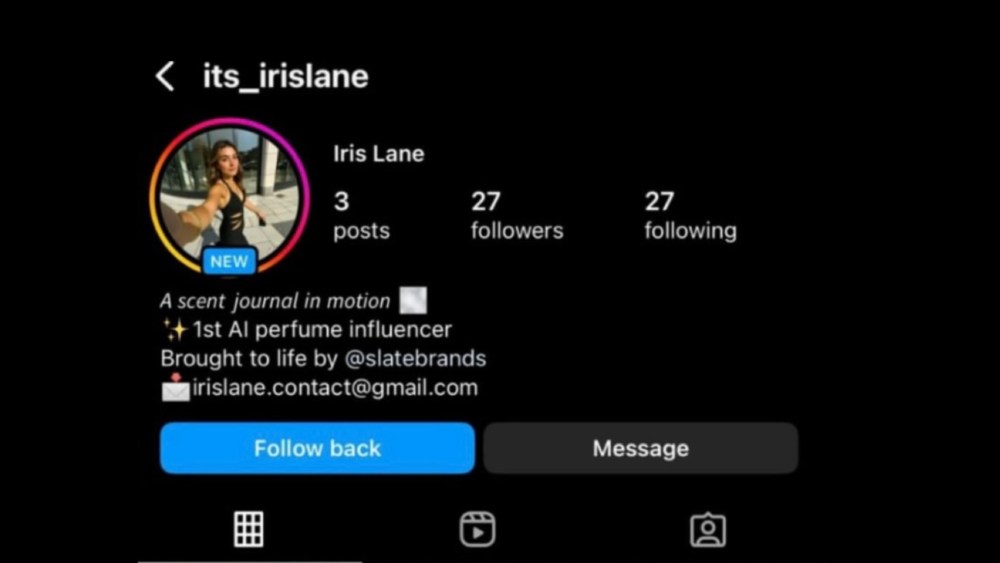
The introduction of Iris Lane, an AI-generated influencer presented by Slate Brands, has stirred considerable discontent among the online fragrance community, notably within #PerfumeTok. Unveiled on Instagram, Lane was marketed as the “first AI perfume influencer” and kicked off her digital persona with mere selfies and sponsored posts that included high-end fragrance brands like Le Labo and Jo Malone. The backlash from real human influencers was nearly instantaneous, emphasizing a growing unease regarding the role of AI in spaces that are deeply rooted in personal expression and sensory experiences.
Many well-known fragrance influencers quickly took to social media platforms to voice their concerns. Elise Grenier, a member of the Sephora Squad, posted a poignant video urging her followers to support real individuals rather than AI-generated avatars. Others echoed her sentiments, with one influencer describing Lane’s account as “dystopian.” This suggests a collective apprehension within the community that the presence of AI influencers could dilute the authenticity and personal connection that characterize fragrance discussions—elements that are essential for sharing the nuances of scent.
Creators who passionately engage in the fragrance community emphasize the beauty of sharing personal experiences with various scents. This willingness to connect over olfactory sensations builds a sense of camaraderie among enthusiasts, which an AI influencer simply cannot replicate. Christina Loff of Dry Down Diaries succinctly pointed out that the heart of the fragrance community lies in genuine human interaction and discovery. By opting for an AI-generated influencer instead of collaborating with knowledgeable humans, brands risk undermining the very fabric of this shared culture and community.
Slate Brands acted quickly to address the backlash, deleting all content from Lane’s account and ultimately removing it altogether. CEO Judah Abraham acknowledged the misstep in their approach, stating that their intent was to explore how AI could enhance creative processes rather than to replace the vital human connections within the fragrance world. Abraham conveyed a belief that AI should be a tool for enhancing creativity—not a substitute for the emotional and cultural nuances brought by human experiences with fragrance.
Though AI-created influencers are not entirely new, their reception has been mixed. The emergence of Shudu Gram as a digital supermodel in 2017 challenged conventional ideas about representation, but also raised issues regarding the ethical implications of AI personas. Critics highlighted the potential exploitation involved when human experiences and identities are commodified by non-human creators. Likewise, Lil Miquela and other AI influencers have also faced scrutiny as debates about authenticity and representation continue to pervade discussions surrounding digital identities.
In 2023, the industry remains divided on the role of AI influencers. The introduction of Aitana Lopez, Spain’s first AI fashion model, adds another layer to this evolving narrative. While digital influencers continue to attract brand partnerships, the outcry from communities like those in fragrance highlights the importance of real human experiences in fostering brand loyalty and consumer trust. As interest in AI grows, the challenge remains to find a balanced approach that respects the intricate relationships formed through shared human experiences while still exploring innovative technologies.