







Today in Paris, the atmosphere buzzed with anticipation as Jonathan Anderson debuted his first womenswear collection as Dior’s creative director. The event was more than just a fashion show; it was a celebration of artistry and self-expression in the fashion world. Notable figures arrived in stunning ensembles, adding a flair of personal style to the occasion. Among them, Greta Lee dazzled with a sleek, slicked-back hairstyle, exuding sophistication and elegance. Rashida Jones, on the other hand, embraced a more bohemian vibe, her wavy curls and choppy fringe reminiscent of icons like Jane Birkin—the perfect blend of classic and contemporary.
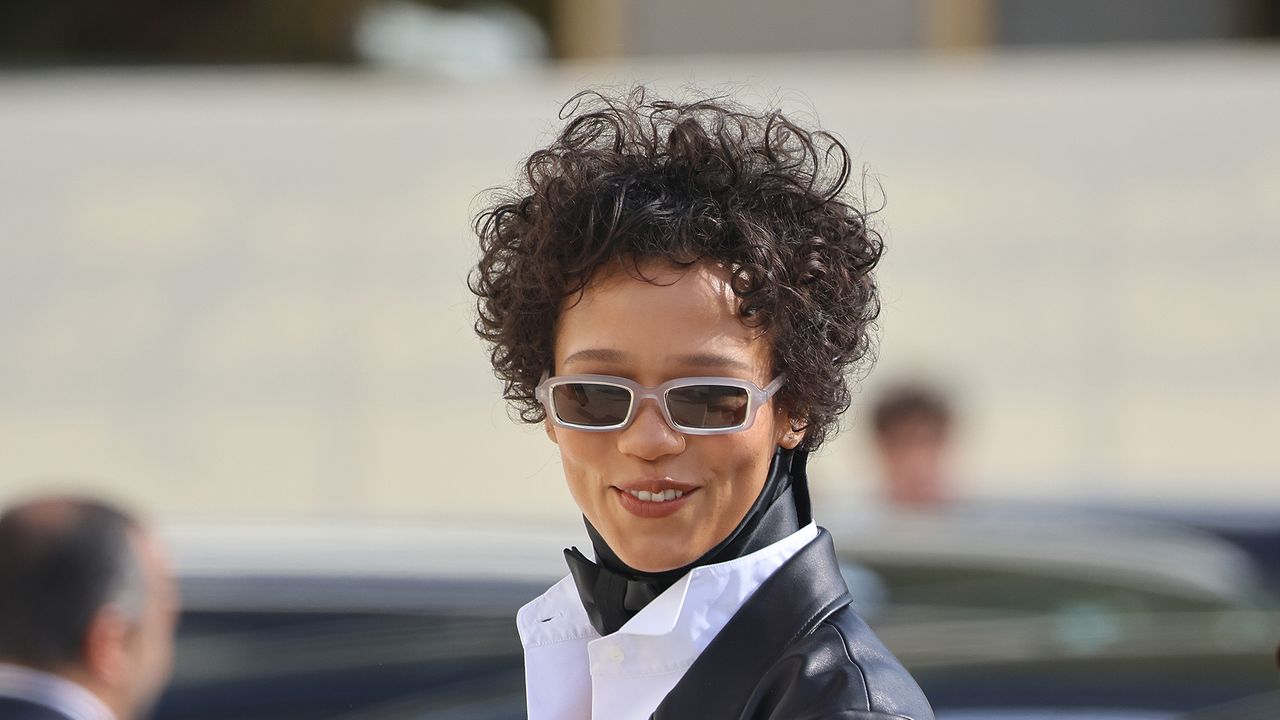
A standout arrival was that of Taylor Russell, who turned heads with her striking outfit choices. She wore straight-leg, light-wash denim jeans paired with chic black pointed heels, a leather blazer, and an unbuttoned white shirt—an effortless blend of casual and polished. Completing the look was a matching tasselled scarf, adding a whimsical touch. However, what truly captured the attention of the crowd was her remarkable mini afro, a stunning tribute to textured hair and its historical significance.
Russell’s hairstyle was not just a fashion statement; it symbolized a cultural homage. The voluminous curls formed into a circle shape evoked memories of the powerful aesthetics of the Black power movement in the ’70s, echoing the styles worn by legendary figures like Whitney Houston. It was a modern twist on an iconic look, showcasing how fashion can serve as both a personal narrative and a broader cultural commentary. The deliberate construction of her curly tresses framed her face beautifully, highlighting her light eyebrows, ghostly lashes, and cinnamon-brown lipstick—not merely an accessory, but a statement of identity.
As the collection unfolded on the runway, it became clear that Anderson was infusing his vision with a vibrant mix of innovation and reverence for the past. Each piece radiated a sense of exploration, merging bold silhouettes with delicate details, challenging traditional notions of femininity. This duality, reflective of the various influences from both the past and present, was echoed in the audience’s reactions—excited murmurs and appreciative nods radiated throughout the crowd.
The essence of the collection seemingly resonated with the women in attendance, particularly through the fashion choices they made to celebrate this pivotal moment. Each attendee brought forth their unique interpretations of femininity, demonstrating how personal style can intersect with broader fashion dialogues. The event became a tapestry of expressions, weaving together vibrancy, history, and personality in a harmonious celebration of the evolution of women’s fashion.
In the end, Jonathan Anderson’s debut was not just about launching a collection; it was about crafting a narrative that speaks to empowerment, individuality, and the rich tapestry of cultural influences that continue to shape fashion. As the lights dimmed and the cheers echoed through the venue, it was evident that this moment marked not only a significant milestone in Anderson’s journey but also a renewed commitment to the transformative power of fashion in expressing one’s identity and heritage.


